Dear reader,
I've been an avid reader of French consumer magazines for some years now. of French consumer magazines.
I find them quite well written, and their investigations are almost always worth reading. worth reading. I often say: it's because because the French are vigilant that they are in good health.
However, I had missed a little magazine called Que Choisir Santé , which, while not bad, caught my eye. my attention.
Unfortunately, I'm rather sorry to see a rather curious trend month after month in this publication.
In this magazine, there's a real detestation of dietary supplements. supplements.
Sometimes I read an article criticizing omega 3 supplementation, sometimes I find another about a herb that causes terrible health problems, when it's not, for the month of April an "anti-buying guide" for dietary supplements. dietary supplements.
As you can imagine, it's a bitter taste in the mouth. because dietary supplements are all the rage, particularly since the particularly since the public health cataclysm that was the Pandemic.
Self-medication now appears to be the only recourse to avoid drugs with "surprise" side effects, dubious experimental injections... as well as hospital stays that risk hospital stays that can lead to a fatal protocol at the first first loss of consciousness...
It would be good, however, to separate the wheat from the chaff. And the magazine in question has great difficulty in doing so.
If they want an interview, I'm ready to give it to them!
"Food supplements are not good".
The article begins as follows: since supplements look like they are not, so it's best to avoid taking them. to avoid taking them.
Then it ends with an insert: When supplementation is really useful.
So there are times when it really comes in handy, aren't there? Alas, the cases where they recommend it are, as we shall see, very limited... very limited...
But let's start at the beginning: first, envy, that cardinal sin. the cardinal sin: dietary supplements will rake in 2.7 billion euros in 2023.
Most of them are sold in pharmacies (which means they are under control...), but their benefits have not been proven. Secondly, they are "rarely" beneficial, so they're not always useless.
Then there's the fact that a good diet is enough, that the marketing of food supplements is "underhand". But it goes even further...
Dietary supplements are said to be risky, with the risk of toxicity risk of toxicity, drug interactions, and finally, of course finally, of course, that you should never, ever, buy them on the Internet.
With the clichés out of the way, it's time for the answers. answers.
My 6 answers to our critics
1/ (Very high) quality exists
Food supplements worthy of the name are serious products (like those products (like those from PHS, which I was able to check directly).
They are not to be taken for frivolous reasons, but for health health issues.
Even when I talk to you about supplements to speed up metabolism metabolism to lose weight, it's all about reducing the inflammation caused by belly fat.
And if some people want to take supplements to improve their sporting performance, as long as it enables them to be in exceptional exceptional health, I support them.
But if it's for self-destruction, or for frivolous reasons, or it's not serious. I find it quite that a consumer magazine puts everything in the same basket...
2/ Supplements have become necessary
Is diet enough? Never in a million years, and especially not the food that's most accessible to us, that of the supermarket essential micronutrients (vitamins, minerals and many other microscopic (vitamins, minerals and many other microscopic elements), are now completely absent...
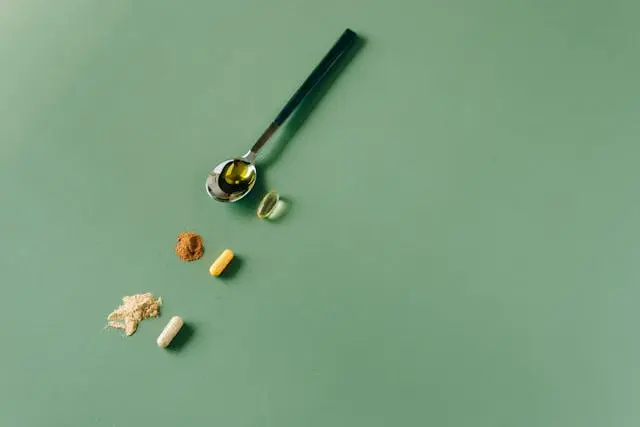
3/ Zero dishonest marketing
Claims are virtually impossible to obtain for products unless giant studies are carried out. Studies that the (Pfizer's $10 billion fine for quackery attests to this). Pfizer for quackery). So we refer to university scientific studies as closely as possible to the quality as possible to the quality used.
It's the guarantee of effective supplements. And there are thousands of studies the efficacy of the products you find in food supplements. dietary supplements.
When you buy a tomato, is there a study to prove that tomato won't make you sick? That it contains the proteins, lutein and many other elements you expect from it? The same goes for supplements...
4/ Risk fantasy
You'll always find fraudulent food supplements. But next to dangerous drugs and adulterated foods, the number is infinitesimal. As far as anticoagulants are concerned (which the efficacy of supplements), a serious brand will warn you. will warn you.
And if you have any problems in this area, it's the first thing you should ask about when you buy... same goes for drug interactions and immunity. or immunity.
A good brand of dietary supplements will always remind you to discuss it with your doctor...
5/ As dangerous as paragliding on a stormy day...
Where? If you stick to the recommended doses, there's hardly any there's virtually no problem. If you overdo it, it's like everything else at your own risk. If you have a liver in condition, start by treating it with detoxes and supplements supplements (I've mentioned them often enough in this letter). in this newsletter).
It would be foolish to burden your liver with you won't be able to metabolize.
6/ The famous carrots fatal
This beta-carotene, which is said to increase smokers' risk of lung cancer has been proven by one study and one study only - and even then, it is a meta-study, and therefore a rather questionable statistical questionable statistical assessment. Does this mean that smokers should be advised to go on carrot diets or take vitamin A? I don't think so.
I've never met a smoker who you could suspect suspected of getting cancer from a beta-carotene supplement. beta-carotene dietary supplement. However, I have many smokers whose cancer I might have suspected had been daily consumption of aspartame.
Alas, the studies on this subject have disappeared...
What would they do without us?
The authors of the article do, however, go so far as to justify the purchase of dietary supplements (without favouring any particular brand, by the way...) Here are some of them:
- Vitamin D to prevent rickets in children? Put them in the sun outside the hottest hours, and gradually gradually, to avoid carcinogenic sunscreens.
- Omega 3 for children? Of course, but be very careful. most marine sources are full of heavy metals. heavy metals. Omega-3s are important for all ages, and an annual an annual course of treatment to avoid deficiencies (if your your diet does not already revolve around this food).
- Supplements during pregnancy? You need to take it don't hesitate to consult a physician who knows knowledgeable. And don't go in blind.

- Vitamin D for seniors? Not only for seniors. Remember that that vitamin D must be taken in winter to prevent osteoporosis fractures (and depression). However, only real sunlight activates your klotho enzyme, which I mentioned mentioned in a recent post. Don't forget to take advantage the summer season.
- Vitamin C at any age ? Of course. You can vitamin C occasionally. But not all the time, as your body must continue to produce antioxidants on its own. Permanent supplementation will make it lazy.
- After bariatric surgery or in addition to a vegan diet vegan diet - that goes without saying.
- What about AMD ? As with any degenerative disease, you should should be added. These diseases are the result of aging, but they can be treated (as far as possible) by purifying the toxins, with ozone therapy, and by reactivating defective organs with the necessary nutrients. There's still a lot to be done in this area, but supplementation does what treatment does what treatment does not: it enables the body to repair itself. body to repair itself.
There's nothing mysterious mysterious
In conclusion, let me say that the pandemic has brought a lot of unreliable a lot of unreliable brands on the market, which are harming nutritional medicine.
But most fraudulent or unreliable products are simply simply low in assets. The most harm they can do is to dissuade you from going for treatment if you really really need it.
That's why it's so important to keep in touch with a doctor who understands who understands nutritional medicine.
We've reached a point where drug-based medicine has reached while remaining dominant in the academic and economic spheres. and economic spheres, which means that journalists don't always know where to turn...
Nutritional medicine, of which dietary supplements are a part is the future of medicine, thanks to its non-invasive non-invasive, health-oriented approach. In addition, it gives independence from an increasingly privatized medical medical system, which is becoming increasingly privatized, and therefore unhealthy relationship with illness.
The future is with us, they should remember that.
Dr. Thierry Schmitz